Skip to content
Hyperscape Digital
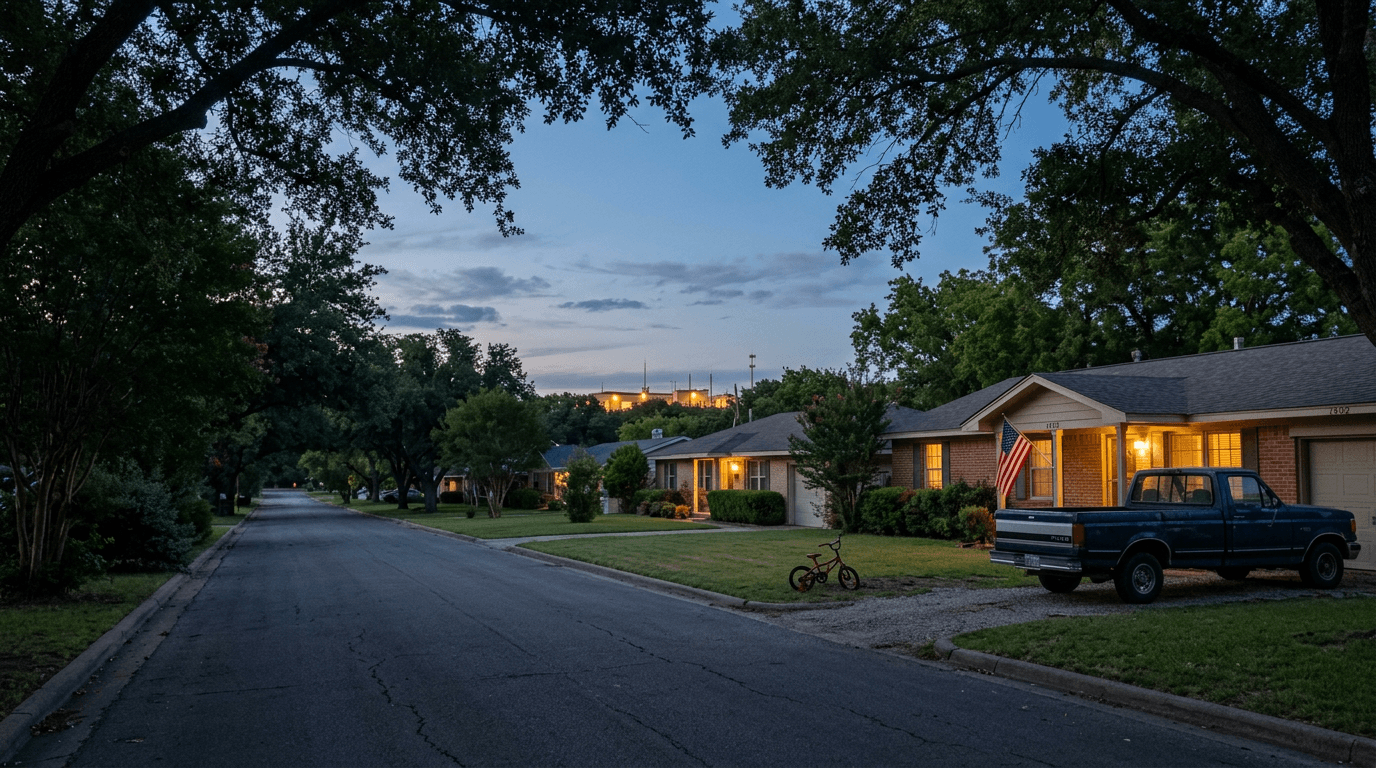
A quiet residential street at dusk, warm-lit homes undisturbed, the campus glowing separately on the distant horizon

Positions

The load pays its own way.

Hyperscape Digital takes positions where the industry is still improvising: who pays for the grid, what a county is owed, and what a capacity claim is allowed to mean. These are operating rules, not a brochure.

Four positions. Binding on how we select, cure, and energize every campus we own.

How to read this

These positions govern site selection, interconnection, rate design, and how we show up in a host county. They sit beside Responsible Impact (the local commitments) and the Intelligence Desk (the market record). When statute or tariff is stricter, the stricter rule wins.

01Ratepayer isolation

Our load does not land on residential bills.

Every campus funds its own power infrastructure. Generation, interconnection, and dedicated network upgrades tied to our load sit with us or our offtaker — not the residential or small-commercial rate base. That is the condition of energization, including for land we took in earlier.

Rate structures are designed so the large load cannot socialize its costs. This is the discipline regulators are now writing into law; we adopted it voluntarily and will keep it even where the tariff is slower.

We will evaluate formal pledges against this position and publish any signature here.

02Interconnection honesty

Utility-confirmed, or we do not call it capacity.

Queue position is a process fact, not a megawatt. A completed load study is evidence the physics can work; it is not a reservation and it is not an energization right. We take powered land in all three states below and cure toward Utility-confirmed. We do not collapse them into one number. The story we tell a tenant is the same story the utility already has.

STATE 1Queued
We have filed. We have a place in a regional process. That is not capacity. A queued site never carries its own megawatt headline on the public site, in a press line, or in a teaser. Queue position may be described as process status only.
STATE 2Study-backed
Capacity check, load study, and/or dynamic modeling support a planning number at a stated POI under dated assumptions. That work de-risks physics. It does not reserve the MW, lock upgrade costs, or authorize energization. Assumptions age the day the next large load files or an ISO audit moves. Study-backed MW may appear in an NDA room with the study date and the open contingencies written next to the number — authorization pending, upgrade scope open, energization freeze. They do not appear on the public site as "capacity," "available," "secured," or "deployable."
STATE 3Utility-confirmed
The serving utility or ISO has committed the MW in an instrument we can put in a data room: will-serve or load-commitment letter, executed interconnection or facilities agreement or equivalent, cost-bounded upgrades, and a dated energization path that does not run through an open prohibition or audit freeze. Only this state is called capacity on the public site. "Immediately deployable" must be State 3. A pipeline figure is not a capacity claim.

Sites still inside an audit or an energization freeze are described that way. We support screens that remove phantom large-load from regional queues. Live grid record: Intelligence Desk.

03Additionality

New load, new supply.

New load needs new supply. We prefer contracted new generation and behind-the-meter or dedicated supply over paper reallocations of someone else's electrons. Where the grid cannot clear the megawatts in time, we design on-site or co-located thermal so the campus is not a stranded transmission bet.

We do not sell "green" that is only a REC stacked on an unconstrained node. If a campus uses gas to bridge, we say so in diligence. Efficiency — density, cooling, PUE discipline — is an operating requirement, not a substitute for bringing watts.

04Host-county bargain

Largest taxpayer. Quietest neighbor. Public terms.

We intend to be the largest taxpayer in the county and the quietest neighbor on the road. Long-dated ownership means the tax base is not a one-cycle event. Construction and operations hiring starts local; where the trades do not exist we help stand up the training seats. Water and noise are design constraints from the first pass, not mitigations after the protest. Benefits that belong to the host — PILOT, training, first response, site-specific water and noise caps — are negotiated in public rather than only inside the incentive packet.

The five local commitments live on Responsible Impact. This page is the rule that puts them there.

National capacity

Powered land is the constraint on American compute.

Training and inference at the frontier are gated by energized, permitted campuses, not by GPU supply alone. We develop and hold that layer in U.S. grids where we already operate as a load counterparty. We are not a model lab and we do not write model policy. We do write the physical conditions those labs now depend on.

What we will publish

Receipts at COD.

Principles without numbers are advertising. When a campus reaches commercial operation we will publish, at minimum:

  • The rate / rider structure that isolates residential customers.
  • Design WUE (or "zero process-water" if closed-loop / air).
  • Local hire share for construction peak and for steady-state ops.
  • Host-county tax contribution in the first full assessment year.

Until COD, those numbers are not published here.

The live grid record is the Intelligence Desk. Neighbor-level commitments sit on Responsible Impact.